With Apple Vision Pro, Apple is launching a product from the future. It’s clear the technology is a stretch: Apple always aims to build the best product possible, not just a good enough product, but this time that has translated into a very high $3499 initial price. As Apple is positioning Vision Pro as a “new computing device”, and not an accessory, the right comparison should be to the price of a computer (i.e. a Mac), but few people buy such expensive computers and it’s double the price of an iPhone.
Upshot: Apple needs this weeks’ initial demos to the assembled great and the good at Apple Park to impress. If the Vision Pro experience is good enough, then the high price will become less important, and over time subsequent headsets will likely drop in price as the necessary hardware becomes cheaper.
There are clear reasons for the high cost. Apple is rightly opting to include super high resolution displays featuring a combined 23 megapixels in resolution — much more detailed than rivals — this is a higher resolution than two 4K TV displays combined. In practice this should mean the virtual displays used for spatial computing deliver a good experience. On existing VR/MR devices such virtual screens look rough and are uncomfortable because the hardware is too low resolution. Here, they should be much better.
In effect Apple is incubating a product from the future using its existing devices and software ecosystem. Apple needs to nurture developers, users, and everyone as the platform improves.
In particular, the Vision Pro headset needs to deliver in a number of key areas to establish itself, it needs:
- Outstanding apps. Yes, Vision Pro supports “compatible iPad and iPhone apps” but the built-for-Vision Pro apps will be key. Apple needs its third party ecosystem on board here as well as creating first party apps too.
- Seamless and solid Wi-Fi connectivity. Apple has demonstrated a variety of spatial computing and entertainment experiences all of which rely on solid Wi-Fi connectivity to watch movies or download apps, or to project a Mac’s display into the headset.
- Comfort. Existing headsets from rivals can be uncomfortable to wear for long periods. Headset physical design is important. Apple will hope the high resolution display removes eye discomfort. But the wired battery pack (or mains power supply) is not ideal.
- Time. At this price, there is no way this will be a mass market device any time soon. Apple will need to nurture the platform, encourage developers, and evangelize the experience.
- Excellent hand and eye tracking. If this part of the interface fails to work perfectly, every time, Apple will rue its decision to omit more conventional controllers.
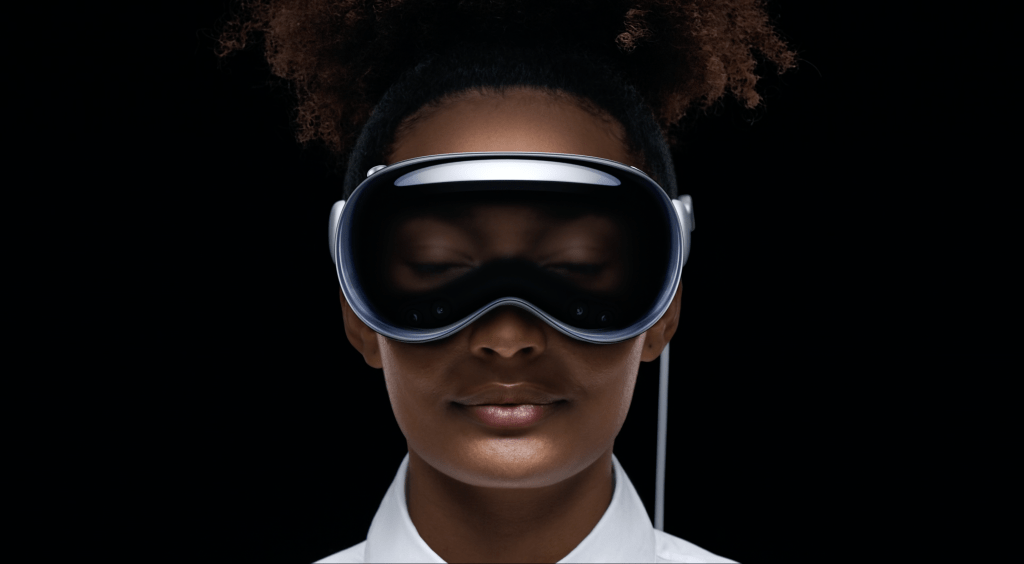
Vision Pro is an extremely unusual device. Alongside the high resolution displays there are numerous cameras and sensors on-board too, including both an M2 SoC borrowed from the Mac as well as a new Apple-designed R1 chip. These both increase cost too but also aim to deliver a superior experience. The display of the wearer’s eyes to those around them is also unique.
Apple has historically observed new markets, analyzed what’s wrong with existing products, then entered them with a product that solves those problems. With iPod, Apple offered a vast library of songs and easy sync to a computer. With iPhone, it was a direct interaction multitouch UX and desktop class apps, not cut down pocket versions. Here, with Vision Pro, Apple has focused on beating the competition with outstanding display quality and with a controller-less user experience, and more elegant merging of virtual and mixed reality worlds.
The future is here, nearly, but at a high cost. Apple has to convince the world the Vision Pro experience is sufficiently wonderful, so that developers now build the compelling apps Vision Pro needs to be available for its 2024 debut in shops and in consumers’ hands.


 strategyif