How mobile network experience affects churn in US wireless carriers

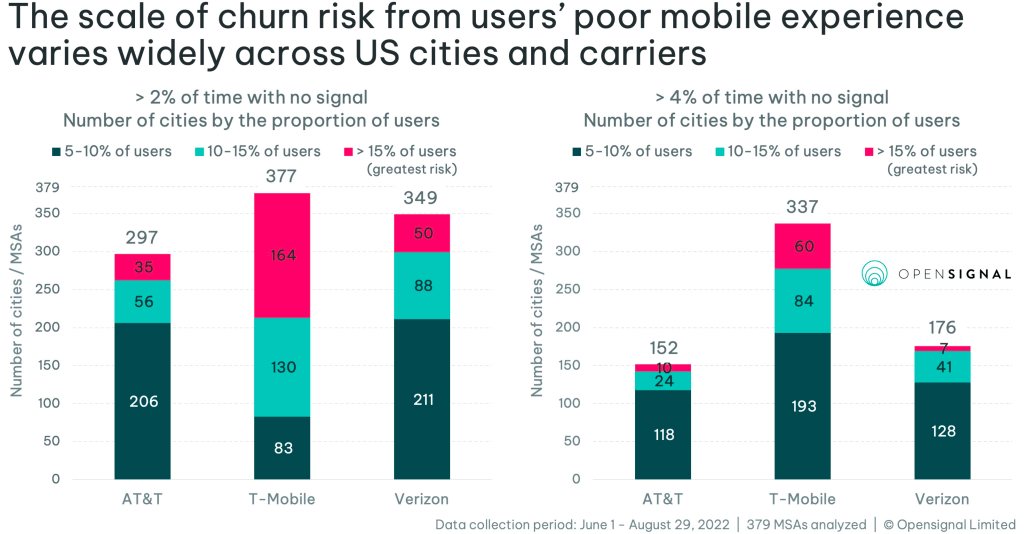
Opensignal data demonstrates there is a strong correlation between users that saw more time spent without cellular signal and relatively worse 5G Availability and those users that switched carrier. This relationship holds true for AT&T and T-Mobile. When we compare the multiplayer gaming experience of Leavers, we see a large difference for T-Mobile, but smaller ones for AT&T and Verizon. On average download speed, both T-Mobile and AT&T Leavers saw significantly slower speeds than the all user average. Read the full analysis here.
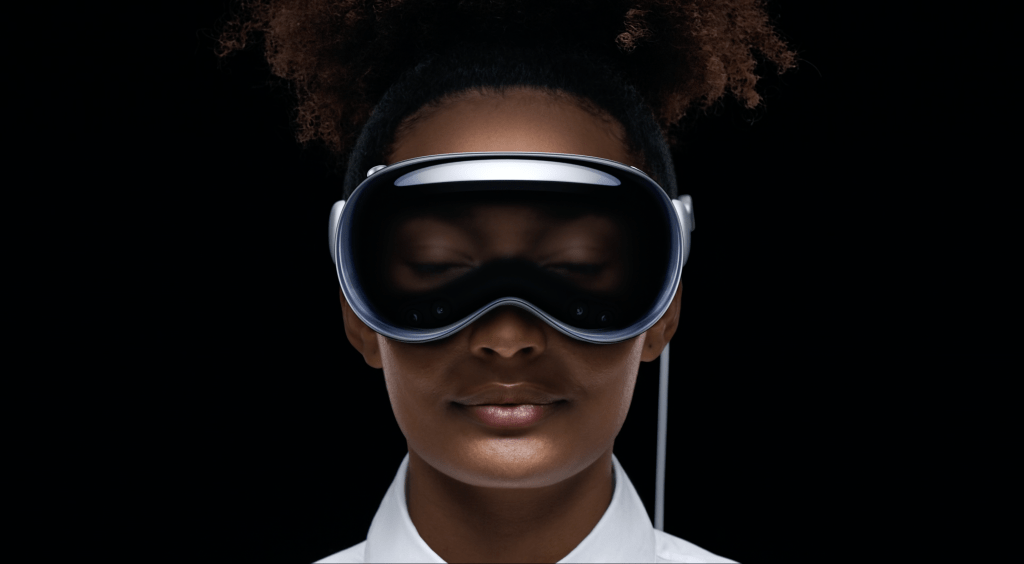
With Vision Pro, Apple forecasts the future of computing

With Apple Vision Pro, Apple is launching a product from the future. It’s clear the technology is a stretch: Apple always aims to build the best product possible, not just a good enough product, but this time that has translated into a very high $3499 initial price. As Apple is positioning Vision Pro as a “new computing device”, and not an accessory, the right comparison should be to the price of a computer (i.e. a Mac), but few people buy such expensive computers and it’s double the price of an iPhone. 

Upshot: Apple needs this weeks’ initial demos to the assembled great and the good at Apple Park to impress. If the Vision Pro experience is good enough, then the high price will become less important, and over time subsequent headsets will likely drop in price as the necessary hardware becomes cheaper. 

There are clear reasons for the high cost. Apple is rightly opting to include super high resolution displays featuring a combined 23 megapixels in resolution — much more detailed than rivals — this is a higher resolution than two 4K TV displays combined. In practice this should mean the virtual displays used for spatial computing deliver a good experience. On existing VR/MR devices such virtual screens look rough and are uncomfortable because the hardware is too low resolution. Here, they should be much better.

In effect Apple is incubating a product from the future using its existing devices and software ecosystem. Apple needs to nurture developers, users, and everyone as the platform improves.

In particular, the Vision Pro headset needs to deliver in a number of key areas to establish itself, it needs:

  • Outstanding apps. Yes, Vision Pro supports “compatible iPad and iPhone apps” but the built-for-Vision Pro apps will be key. Apple needs its third party ecosystem on board here as well as creating first party apps too.
  • Seamless and solid Wi-Fi connectivity. Apple has demonstrated a variety of spatial computing and entertainment experiences all of which rely on solid Wi-Fi connectivity to watch movies or download apps, or to project a Mac’s display into the headset.
  • Comfort. Existing headsets from rivals can be uncomfortable to wear for long periods. Headset physical design is important. Apple will hope the high resolution display removes eye discomfort. But the wired battery pack (or mains power supply) is not ideal.
  • Time. At this price, there is no way this will be a mass market device any time soon. Apple will need to nurture the platform, encourage developers, and evangelize the experience.
  • Excellent hand and eye tracking. If this part of the interface fails to work perfectly, every time, Apple will rue its decision to omit more conventional controllers.

Vision Pro is an extremely unusual device. Alongside the high resolution displays there are numerous cameras and sensors on-board too, including both an M2 SoC borrowed from the Mac as well as a new Apple-designed R1 chip. These both increase cost too but also aim to deliver a superior experience. The display of the wearer’s eyes to those around them is also unique.

Apple has historically observed new markets, analyzed what’s wrong with existing products, then entered them with a product that solves those problems. With iPod, Apple offered a vast library of songs and easy sync to a computer. With iPhone, it was a direct interaction multitouch UX and desktop class apps, not cut down pocket versions. Here, with Vision Pro, Apple has focused on beating the competition with outstanding display quality and with a controller-less user experience, and more elegant merging of virtual and mixed reality worlds.

The future is here, nearly, but at a high cost. Apple has to convince the world the Vision Pro experience is sufficiently wonderful, so that developers now build the compelling apps Vision Pro needs to be available for its 2024 debut in shops and in consumers’ hands.

Poor connectivity damages the mobile app business

With new extended reality (XR) and augmented reality offerings imminent — most likely from Apple and Meta — that need fast low latency connections to connect to cloud services, good quality connectivity is becoming even more important, on Wi-Fi as well as with mobile. 

With poor mobile connectivity, users spend 20% less time in each app session while with poor Wi-Fi it’s an even greater 38% less time. After seven days, app retention rates are 49% lower for users that have seen consistently poor connectivity. Poor connectivity is commonplace. Opensignal data demonstrates that in 29% of mobile app sessions users experienced a poor signal. With Wi-Fi, 11% of app sessions had a poor signal.

Poor connectivity directly affects app revenues as well as increasing user dissatisfaction. Almost all apps are monetized either through in-app purchases or advertising. Both business models require people to continue using the app. Data.ai (formerly App Annie) reports 2022 total global app revenues were $336bn for advertising and $167bn for app store spend, of which almost all was either in-app purchases or paid subscriptions. Read the full analysis here

At busy times 5G is more consistent than 4G in Japan

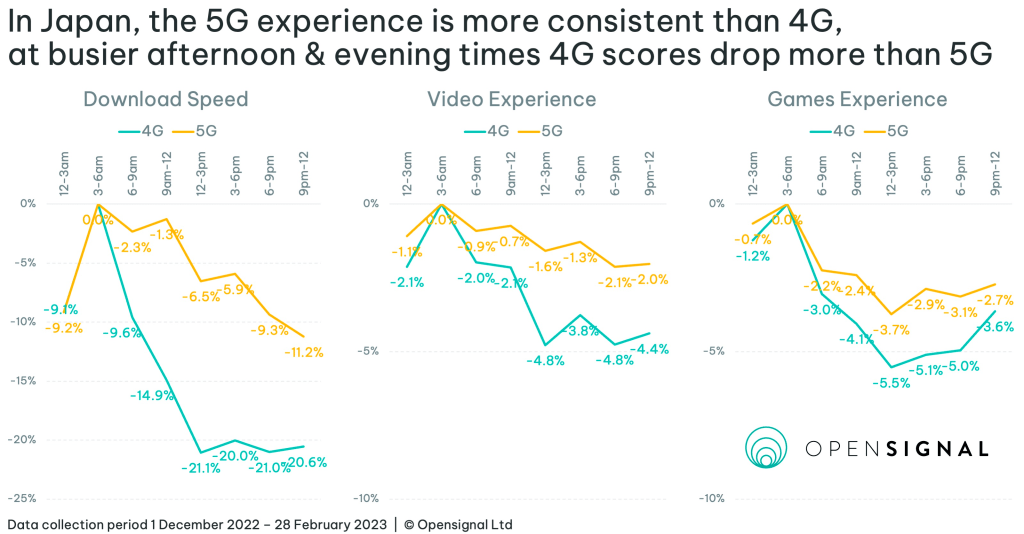
In Japan the 5G experience continues to be far superior to older 4G technology. But it’s not only the average experience which is better with 5G, but also the consistency of the mobile experience. At busy times of the day when there are more users awake and more usage of the networks, Opensignal’s latest analysis shows the quality of the 4G experience falls much more than the 5G experience and is more likely to cause users problems. Read the full analysis here.

Quantifying the satellite smartphone opportunity in Japan

With the iPhone 14 launch smartphone satellite connectivity has now arrived in some global markets, and will likely arrive soon in others, like Japan. But the extent of the opportunity for services beyond emergency communications, such as two way messaging and regular Internet connectivity, is uncertain especially in advanced markets like Japan with strong mobile networks.

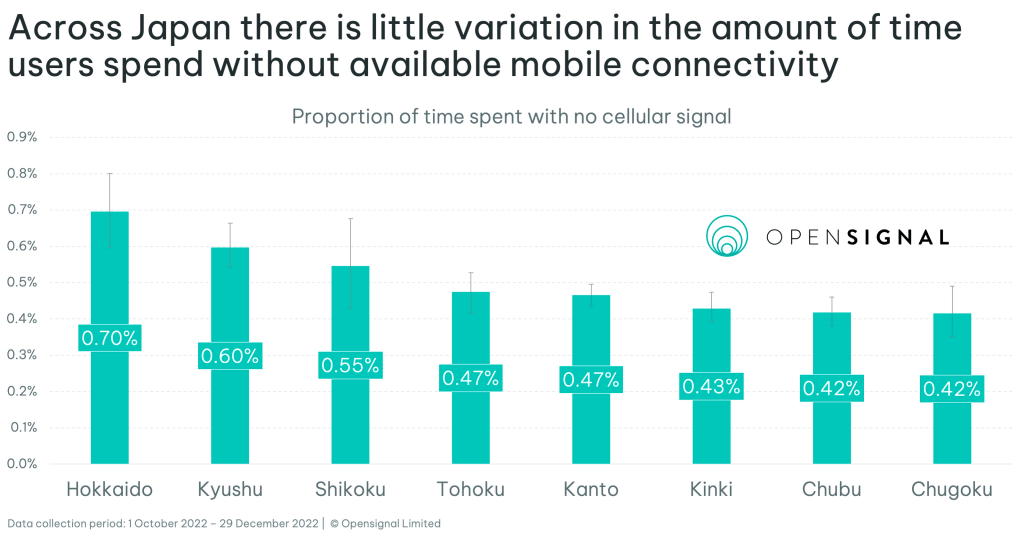
Japanese smartphone users have the third best “no signal” time globally in Opensignal’s new analysis with just 0.41% of time without available mobile services. Read the full analysis here.

Sizing the satellite connectivity opportunity for smartphones

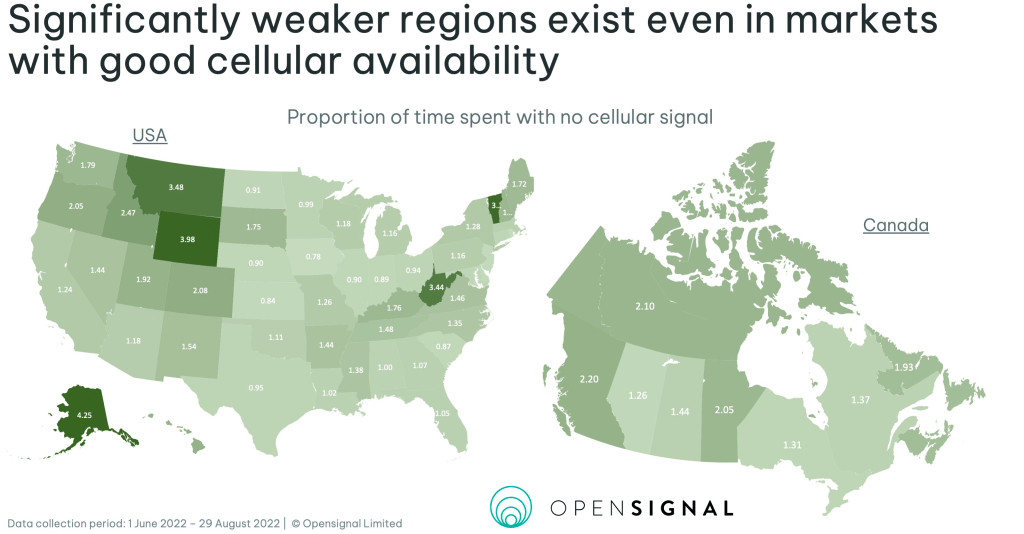
Satellite connectivity is coming to smartphones, Apple is adding Emergency SoS using satellites to the iPhone 14 range. Initially, it will be available in the U.S. and Canada. In time, it will possibly come to cellular smartwatches as well. Also, Huawei has announced similar support in the Mate 50. Now, Opensignal has analyzed over 100 global markets to understand the extent of the cellular “no signal” problem that mobile users face and which satellite connectivity seeks to solve. Satellite connectivity offers not just connectivity for all, but connectivity all of the time. Read the full analysis here.

Making the smartwatch independent

Sales of smartwatches have to date been limited by their reliance on the smartphone. Apple can’t sell its Watch to Android phone users, even if they use other Apple products such as the iPad or the Mac. Similarly, WearOS smartwatches only work fully when paired to an Android smartphone. Even if the manufacturer supports iPhone pairing, which not all do, then the linked WearOS watch loses many functions on iOS.

And, by making the watch a phone accessory, it has limited the appeal of the smartwatch for those not excited by health and fitness features. Why use a watch for music streaming, or navigation, or contactless payment, etc etc if there has to be a smartphone near at hand? Why should a developer create a standalone watch app if the user must own a smartphone?

With cellular functionality, and on-board watch app stores, there is now little reason for a smartwatch to still require a smartphone in order to operate with all features intact. But modern smartwatches — even cellular ones — are still dependent on a paired smartphone. For Apple Watch, if the paired iPhone is not nearby, then it acts as a remote mini router to forward app notifications to the remote Watch.

There is a precedent for the smartwatch to drop its smartphone dependence. Twenty years ago the PC or Mac was the digital hub to which all other devices connected, including the iPod and early iPhones (which required a computer for first set up). Ten years ago the smartphone replaced the PC as the hub. Now, the cloud has become the hub for digital living and working, with all devices reliant on cloud services for backup, sharing information, and providing a consistent experience.

For the smartwatch to break free of the smartphone, and so increasing the addressable market and improving smartwatch utility for users, several things must happen:

  • Cloud synchronization replaces smartphone pairing. Rather than smartphone apps forwarding notifications and information to the watch, the watch must connect directly to the cloud.
  • Operators should make cellular support easier. Many operators support the eSIM used on cellular smartwatches, but not all. And, most still price cellular service for a device that uses a tiny fraction of the data a smartphone uses at well above the equivalent smartphone price per gigabyte.
  • Greater battery life, to encourage independence. Larger, rugged, outdoor smartwatch designs make it easier to include greater battery capacity in the larger form factor. With more battery capacity, the smartwatch can take on more functions, be used independently for more hours, and yet critically still deliver at least a full day’s typical usage. 
  • For Apple, health data should shift from iPhone to watch. Today, the iPhone includes a secure enclave in its system on a chip (SoC) that stores health data. While other companies may be content to simply move this personal health data into the cloud like everything else, given Apple’s privacy strategy of keeping sensitive functions on the device, Apple needs to move users’ primary health store onto the wrist where it’s captured. 

There are signs Apple is already creating the foundations for an independent Apple Watch, just as it made the iPhone independent of the Mac and PC using iCloud. Apple Watch has had cellular capability since version 3 — even before Apple introduced an always-on display. Family setup allows a parent to give a child an Apple Watch — even if the child does not own an iPhone — and is testing some of the necessary capabilities for an independent Apple Watch that can be used by anyone, without an iPhone.

Once the smartwatch is independent we will likely see some existing smartwatch features take off in usage and new ones arrive. The watch will become the primary Google Pay and Apple Pay device. Authentication will similarly jump from phone to the wrist, whether it’s acting as a two factor device for logging onto apps and websites, or for unlocking home or car smart locks. Bluetooth earphones and headphones will be used more with the Watch too, for communication, and for music streaming — which is why Apple Music already has a full watch app.

The smartphone will not disappear. It will still sell in vast volumes and be used by almost everyone. But it will no longer be such a central device for the digital life. We will move to a multipolar device world, where users will switch the combinations of devices they use depending on their situation and needs at a given moment in time. Smartglasses, headsets, earphones, tablets, smartwatches, computers and smart home devices will all be used together in various combinations.

And, shifting more functions away from the smartphone, will also build foundations now for a post-smartphone future, for a time when the technology is ready for smartglasses to become viable mass market devices.

The collateral damage on innovation from slowing smartphone shipments

Multiple sources now report smartphone shipments have dropped in 2022. The impact of slowing smartphone shipments will be felt far beyond the smartphone market because the smartphone has been at the heart of consumer technology innovation for a decade. For example:

  • 5G roll outs will be affected. Mobile operators need consumers to adopt new phones with the latest versions of 5G in order for their network investments to convert into consumer benefits. Newer models support standalone, better carrier aggregation across spectrum bands, and network slicing among other areas. In other words, 2022 smartphone models support the newer features of 3GPP Release 16 and 17 while models from just a couple of years ago only support early Release 15 standard 5G capabilities.
  • App makers will have to support older Android versions for longer. Among Android smartphones, users typically switch to the latest Android version when they buy a new phone. Most phone models older than three years never see an upgrade. So, if the smartphone market slows, so will the number of users that have a phone using a recent Android version and any app developers that need a new Android feature to be widely adopted will need to wait longer.
  • Adjacent market innovation will slow. The enormous scale of the smartphone market has enabled companies to re-use technologies developed first for the smartphone in other markets. If the smartphone market shrinks, there will be less of this adjacent innovation. Past examples include ARM system on a chips that now power the latest smartwatches, VR headsets, Mac and Windows computers, and threaten x86’s position in the data center.

Many services, apps, and other hardware products rely on the pace of smartphone upgrades to push new technologies into mass market adoption. By comparison, other product categories that have had much slower upgrade cycles — TVs, PCs, cars, etc. — take years longer than the smartphone for any new innovation to reach a critical mass of users. 

There’s an expectation among many in the mobile industry that it will be as resilient to economic slowdown now as it was slightly over a decade ago after the financial crisis of 2008/9. But the economic stresses the world faces now will likely accelerate the current slowdown in shipments, because the market is not the same now as it was then:

  • Consumers are no longer buying their first modern smartphone, they already have one that works well. Then the smartphone market was recession-proof as consumers prioritized buying one of the then new generation smartphones over other spending because of the appeal of the new Apple and Android smartphones with their desktop-quality apps and multitouch user interfaces which were a massive jump forward over their existing dumb phones. Now, the choice for a consumer is whether to switch to a marginally better 2022 model or to hold onto the still very capable model they own and that still works fine.
  • Smartphone makers have already taken steps to stem the effect of lengthening upgrade cycles. Over the last few years smartphone makers have made their premium smartphone models more expensive as the market matured. Their thinking is that if consumers buy a new phone less often, but spend more when they do, then they can maintain their revenue and profit levels. With disposable incomes falling due to much higher energy prices and double digit inflation this tactic will no longer work. Many consumers will either upgrade their smartphone less often, or spend less when they do, or likely both.

There are some positives to take, notably around the environment: If users hold onto their devices for longer then they will expect to be able to be able to repair their devices, and manufacturers will need to adapt to support existing users for longer. As a result, carbon emissions from manufacturing will be amortized over a longer time.

There is still plenty of innovation in the market too. Foldables are an attractive and interesting category that have only recently become compelling. Camera innovation is still moving fast. And, augmented reality is still a tantalizing prospect that is a niche held back by current technology, but will not be for much longer. Yet none of these have the compelling mass appeal of Android and Apple smartphones back in 2008/9. Those looking to innovate now with bold product launches must pick their market timing even more carefully than normal.

What’s clear now is that the world’s economy is slowing dramatically. Energy costs are rising. And, anyone assuming that the mobile market will be as resilient this time as it was in previous economic downturns must think through their assumptions. And, the role of the smartphone in the wider technology market means slowdowns in smartphone shipments will have wide impacts and likely unexpected collateral damage.  

5G beats Public Wifi for gaming as well as speed

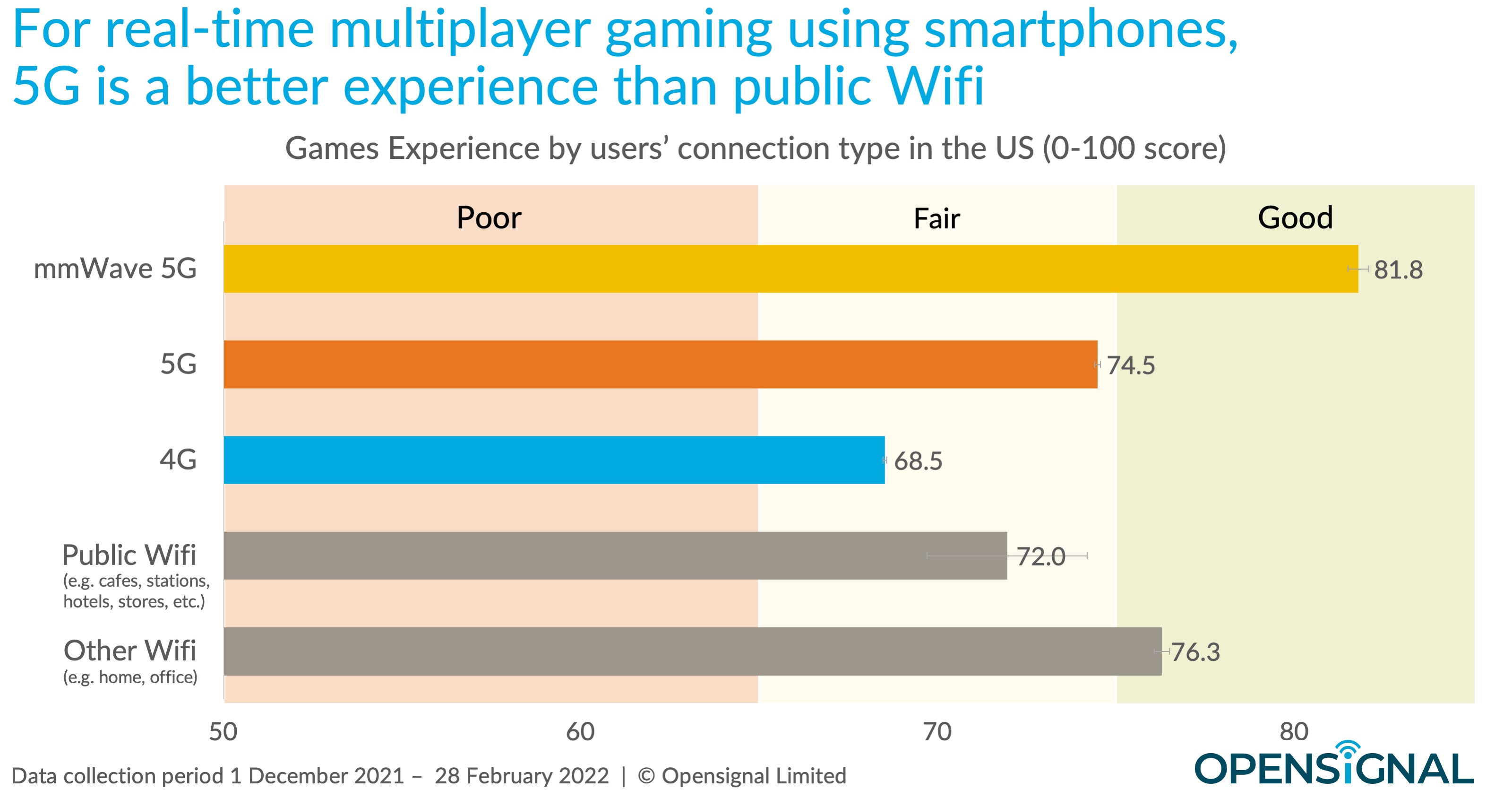
For a long time, users have assumed that Wifi always offers a superior experience to cellular connectivity, when using the Internet on mobile devices, either at home or in public places. Improvements to mobile technology with the evolution to 5G mean that this is no longer the case. Read the full analysis here.

The Smartphone Experience Shift from 4G to 5G

Analysis of how Apple’s latest lower cost iPhone, the 2022 iPhone SE, compares with other iPhone models and rival smartphone makers in 5G experience. Notably, Apple prioritized including 5G and the modern A15 chipset over other potential enhancements such as adding Face ID or multiple rear cameras. Apple is not alone with this shift to 5G, other smartphone makers are now increasingly including 5G in mid-range and even in some entry level smartphone models. Read the full analysis here.